
association for art history fellowship announcement
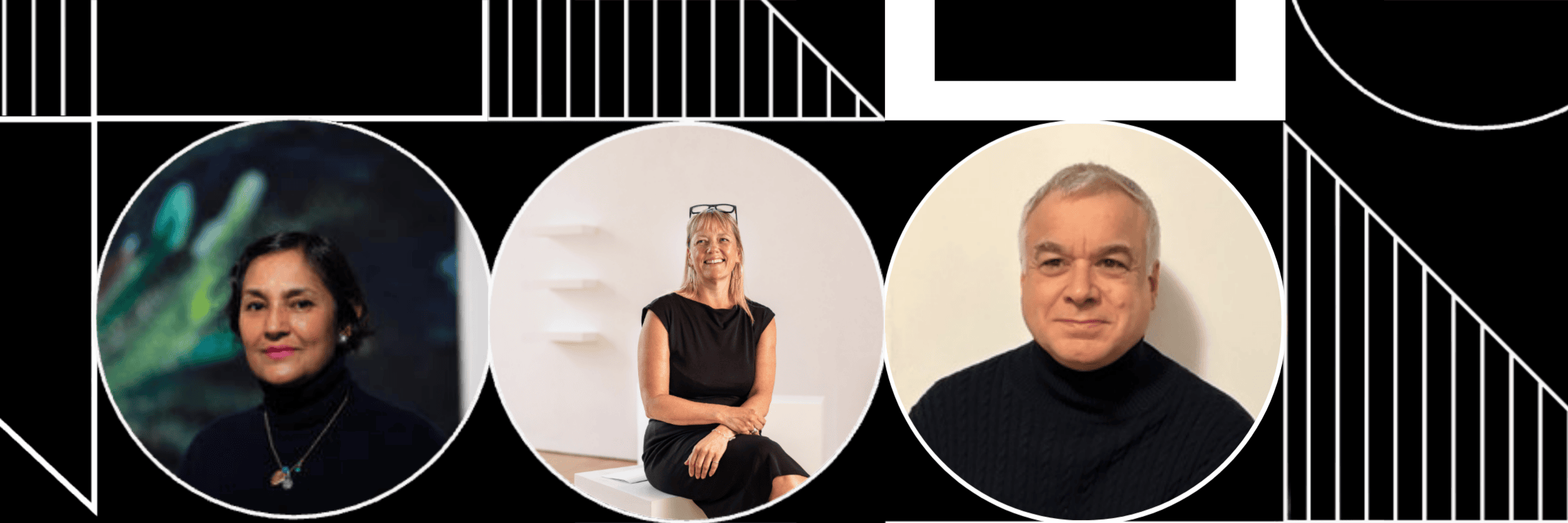
The Association for Art History is delighted to announce the appointment of three new Fellows in recognition of their outstanding contributions to the field: Sutapa Biswas FAAH, Professor Abigail Harrison Moore FAAH and Adrian Locke FAAH.
The AAH Fellowship programme, now in its sixth year, recognises significant achievement and sustained contribution to the field of art history. Through this initiative, the Association honours individuals whose work has advanced research, education, curatorial practice, artistic production and public engagement, while reflecting the breadth, diversity and inclusivity of the discipline.
Fellows are selected through an open nominations process and chosen by a panel of respected peers. The Awards celebrate excellence, originality and advocacy, and recognise contributions that support AAH’s mission and values.
Sutapa Biswas, FAAH
Sutapa Biswas FAAH is a London-based artist and educationalist. Born in Santiniketan, India, she moved to the UK as a child and later studied Fine Art and Art History at the University of Leeds. There, as noted by art historian Griselda Pollock, Biswas transformed the course by challenging her tutors from the very first week to confront and redress its Eurocentric foundations.
As an undergraduate, Biswas created now iconic, feminist works that questioned imperialist readings of art and art history, including Housewives with Steak-knives and Kali. Both were later exhibited in Lubaina Himid’s landmark ICA exhibition The Thin Black Line (1985), cementing Biswas’s position as a key figure in the Black British Arts Movement. Over her career, she has exhibited nationally and internationally at Tate, the British Museum, the Art Gallery of Ontario, the Havana Biennial, and the Neuberger Museum, New York. and the Melbourne International Arts Festival, among many others. Recent solo exhibitions include Kettle’s Yard, the BALTIC, and Autograph ABP. Between 2023-25, her works were included in Tate’s major touring exhibition ’Women in Revolt! Art and Activism in the UK 1970 to 1990.
For over 40 years, Biswas has taught in UK higher education, influencing generations of artists. Her work is held in major collections, including those of Tate, Bristol, and Sheffield Museums. Her accolades include fellowships at Yale University and The Banff Centre for the Arts, and awards from Art Fund UK and Art360 Recollect with DACS.
Abigail Harrison Moore, FAAH
Professor of Art History and Museum Studies at the University of Leeds, Abigail’s research focuses on 19th and early 20th-century art and design history. Her monograph, Fraud, Fakery and False Business (Continuum, 2011), considered the antiques market in 1920’s England. She currently leads an international project on gender and the histories of energy (In a New Light; Histories of Women and Energy (MQUP, 2021).
While Abigail has worked at Leeds for over 30 years, she has also taught in a wide range of educational settings, including schools, museums, and prisons. She is a campaigner for access to education in the arts and humanities, helping develop the curriculum for art history and art. She leads a range of projects for teachers and pupils, including Art Teachers Connect; the Discover ARTiculation Challenge and Discovery Days, and a national EPQ programme.
She currently combines these two strands of her research and practice, working with Leeds Museum’s Preservative Party of 14–24-year-olds to co-produce histories of women and energy in the home. We consider who has been missing from energy history and how a wider diversity of people can be included in domestic energy decisions in the present and future. You can listen to the group speak about this and the value of participatory research on our podcast: https://whosepower.podbean.com/
Adrian Locke, FAAH
After completing a PhD in the Department of Art History and Theory at the University of Essex in 2001 Adrian Locke joined the Exhibitions Department at the Royal Academy of Arts. Since then he has worked on a diverse portfolio of over twenty ground-breaking and award winning exhibitions that range from major surveys of contemporary artists, including Anish Kapoor, Ai Weiwei, and William Kentridge to cultural explorations such as Aztecs, Turks: A journey of a Thousand Years, 600-1600, Byzantium 330-1453, and Oceania, and smaller, focussed exhibitions such as Mexico: A Revolution in Art, 1910-1940, Leon Spilliaert, and Rita Angus: New Zealand Modernist. He has lectured and published widely. His last exhibition at the RA was Kerry James Marshall: The Histories.
Adrian has also worked collaboratively on exhibitions for other institutions, including Art Exchange at the University of Essex, Colchester; Minories, Colchester; Casa de América, Madrid; Philadelphia Museum of Art; Museum of New Zealand Te Papa Tongarewa, Wellington; Taipei Museum of Fine Art; the Brazilian Embassy in London and the V&A.
He was a Visiting Fellow at the University of Essex, 2014-16 and in 2018 was awarded the Orden do Rio Branco by the Brazilian government for services to culture.
Adrian is now working as an independent curator and art consultant.
About the AAH Fellowship Programme
The AAH Fellowship programme recognises individuals who have made outstanding contributions to art history and its wider public understanding. Honourees may include academics, curators, educators, artists, and those who promote and support the subject through public engagement and advocacy.
Nominations are open to all, and nominees may be at any stage of their careers. Submissions are limited to 500 words and should demonstrate how nominees have contributed to their area of specialism, advanced the discipline more broadly, supported the Association’s mission, or embodied its values of inclusivity, excellence, and advocacy.
Each year, two to three Fellows are selected by a panel of respected peers. The awards are formally conferred at the AAH Annual Conference.
The 2026 Fellows will be honoured at the Association’s Annual Conference at the University of Cambridge, from 8–10 April 2026.