
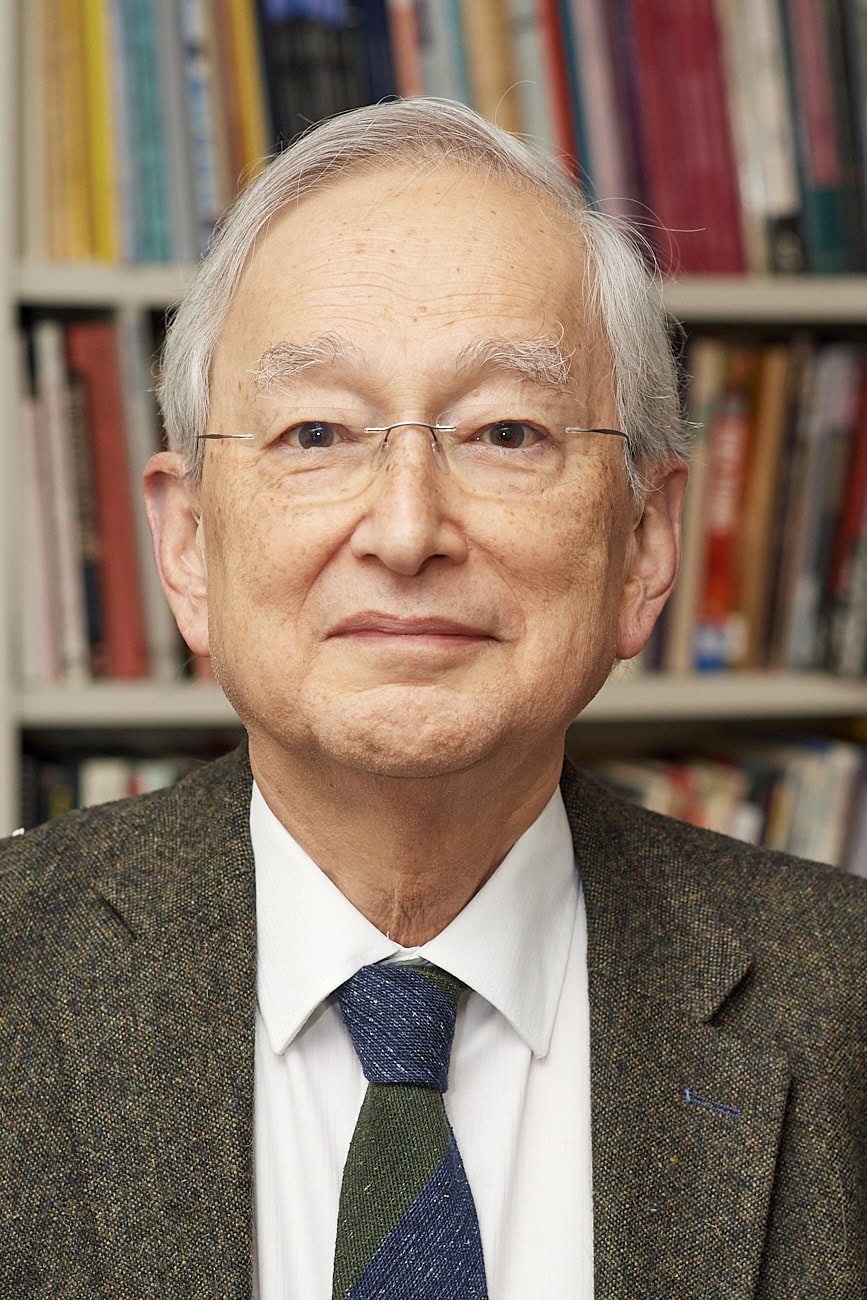
Toshio Watanabe (10 August 1945 –27 July 2025)
The distinguished art historian Professor Toshio Watanabe died while on holiday in Hokkaido, shortly before his 80th birthday. He was a renowned specialist on the profound influence of Japanese art and design in the West in the later nineteenth century. His broader interests included painting, design, manga, and Japanese crafts and gardens (including those outside Japan). Toshio was a deeply committed teacher and a generous colleague and mentor. He was a champion of academic workplace rights and academic freedom as his work on censorship, war art, and shunga (woodblock print erotica) demonstrated.
Toshio was awarded his BA by Sophia University in Tokyo in 1968 and an MA and DPhil by the University of Basel. Following a decade (1977-1986) teaching at the City of Birmingham Polytechnic, Toshio moved to Chelsea College of Art, now part of the University of the Arts, London, where in 2004 he founded the Research Centre for Transnational Art, Identity and Nation (TrAIN). Upon his retirement from Chelsea, Toshio became Professor for Japanese Arts and Cultural Heritage at the Sainsbury Institute for the Study of Japanese Arts and Cultures (SISJAC) at the University of East Anglia, where he was made Emeritus Professor in January 2025.
A prolific scholar, he published his first book, on Turner’s Watercolours and Drawings in 1978. A further eight volumes followed, of which one of the most important was High Victorian Japonisme (1991). This was accompanied by a host of book chapters and journal articles, essays and contributions to catalogues. Some of these works were gathered together in the inaugural Sainsbury Institute Occasional Paper in 2020, Collected Papers by Toshio Watanabe: Interpreting Japan. One of his most significant early contributions was the 1991 exhibition and accompanying catalogue, co-edited with Tomoko Sato, Japan and Britain: an aesthetic dialogue 1850-1930 at the Barbican Art Gallery in London and the Setagaya Art Museum in Tokyo, 1991. This surveyed the rich exchange of ideas and influences between Japan and Britain following the opening of trade links in the mid-nineteenth century, and featured works by figures including Whistler, Rossetti, Beardsley, and Rennie Mackintosh, together with paintings, prints, ceramics and textiles by both British and Japanese artists.
Toshio played an important role in bringing the transnational study of Japanese art, design and architecture to the mainstream. He was Chair of the Association of Art Historians (now the Association for Art History) from 1998 to 2001 and ex officio Chair of the Editorial Board of Art History, as well as being on the boards of the Journal of Design History, Art, Design and Communication in Higher Education and Japan Forum, the journal of the British Association for Japanese Studies. He was President of the US-based Japan Art History Forum, served on the Advisory Board of the Tate Research Centre: Asia-Pacific and was active in CIHA (Comité International de l’Histoire de l’Art).